
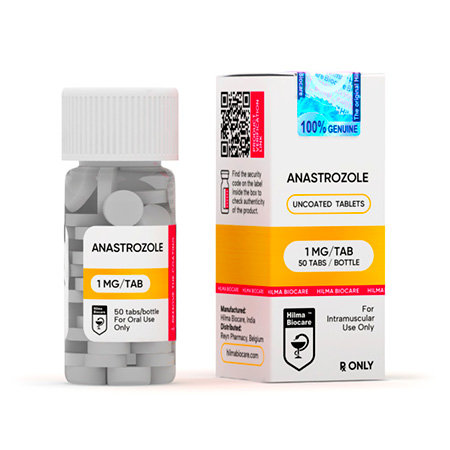
Anastrozole (Arimidex) 1 mg/Tablets – 50 Tablets: UK Product Information
Overview
Anastrozole is an aromatase inhibitor used primarily in the treatment of certain hormone-sensitive breast cancers. It reduces the production of oestrogen in the body and is particularly relevant to postmenopausal patients when clinically appropriate.
The stated presentation contains 1 mg per tablet with 50 tablets in the package. This describes the labelled strength and quantity only. It should not be interpreted as a recommended dose, treatment schedule, or instruction for personal use.
For UK readers, anastrozole should be distinguished from dietary supplements and medicines obtained through unregulated online sources. Appropriate treatment depends on diagnosis, medical history, and professional assessment.
What Is Anastrozole?
Anastrozole belongs to a group of medicines called aromatase inhibitors. Aromatase is an enzyme involved in the conversion of certain hormones into oestrogen. By inhibiting this enzyme, anastrozole can significantly reduce oestrogen production.
Arimidex is a brand name associated with anastrozole. However, a brand name or online product listing does not independently establish authenticity, regulatory approval, pharmaceutical quality, or suitability for an individual.
Anastrozole is different from selective oestrogen receptor modulators because it primarily reduces oestrogen production rather than simply modifying oestrogen receptor activity in particular tissues.
1 mg/Tablets – 50 Tablets
The stated specification is 1 mg per tablet with 50 tablets in the package. If every tablet contains the labelled strength, the complete package represents a nominal 50 mg of anastrozole.
This calculation is provided solely to clarify the stated product specification. It does not constitute a recommended amount, treatment duration, or personal dosing instruction.
When evaluating a medicine, relevant information includes the active ingredient, tablet strength, manufacturer, batch or lot number, expiry date, packaging integrity, storage requirements, excipients, and official product documentation.
Medical Uses
Anastrozole is commonly associated with the treatment of hormone receptor-positive breast cancer in postmenopausal women. It may be used at different stages of treatment depending on the clinical circumstances.
Treatment plans can involve surgery, radiotherapy, chemotherapy, endocrine therapy, or other medicines. The appropriate approach depends on tumour characteristics, menopausal status, previous treatment, recurrence risk, and other individual factors.
Because anastrozole substantially reduces oestrogen levels, its use should be based on an appropriate medical indication and monitored by a qualified healthcare team.
How It Works
Aromatase converts androgens into oestrogens in various tissues. In postmenopausal women, peripheral conversion is an important source of circulating oestrogen.
By inhibiting aromatase, anastrozole reduces oestrogen production. Lower oestrogen exposure can help limit stimulation of hormone-sensitive breast cancer cells.
This mechanism also explains why treatment can produce effects associated with reduced oestrogen levels, including changes affecting bones, joints, and overall wellbeing.
Potential Side Effects
Anastrozole can cause side effects. Commonly reported effects include hot flushes, joint or muscle discomfort, tiredness, headache, nausea, and mood changes.
Because reduced oestrogen can affect bone metabolism, long-term treatment may contribute to reduced bone mineral density and an increased risk of osteoporosis or fractures in some patients.
Changes in cholesterol levels may also occur. Healthcare professionals may therefore consider bone health, cardiovascular risk, and other relevant factors during treatment.
Patients should report persistent or severe symptoms to their healthcare team rather than changing treatment independently.
Interactions and Clinical Monitoring
Anastrozole can interact with other medicines and should be considered in the context of the patient’s complete treatment plan.
People should tell their doctor or pharmacist about prescription medicines, over-the-counter products, supplements, and herbal preparations they use.
Monitoring requirements vary according to the individual and the reason for treatment. Bone-health assessments, clinical reviews, and other investigations may be appropriate during longer-term therapy.
Patients should follow the treatment plan provided by their healthcare professional and should not independently alter the amount or duration of therapy.
Product Verification
Reliable product documentation is important when evaluating any medicine. Relevant information includes the active ingredient, tablet strength, manufacturer, batch number, expiry date, packaging details, storage requirements, and appropriate regulatory information.
Online photographs, reviews, brand names, and promotional claims cannot independently verify authenticity.
Medicines obtained through unregulated sources may contain incorrect ingredients, inaccurate strengths, contaminants, or undisclosed substances. If the identity or quality of a medicine is uncertain, a pharmacist or qualified healthcare professional should be consulted.
UK Regulatory Considerations
UK readers should obtain prescription medicines through legitimate healthcare and pharmacy channels. The Medicines and Healthcare products Regulatory Agency (MHRA) provides regulatory oversight and medicine-safety information in the United Kingdom.
Online availability does not demonstrate that a product is authorised, genuine, or suitable for a particular person.
Responsible UK SEO content should avoid presenting prescription medicines as ordinary supplements or promoting unapproved uses. Accurate information should distinguish established medical indications from claims found in bodybuilding or online communities.
Responsible SEO Information
A strong UK-focused page can establish topical relevance without excessive repetition of the primary keyword. Related terminology may include anastrozole, Arimidex, aromatase inhibitor, oestrogen suppression, hormone-sensitive breast cancer, 1 mg tablets, 50-tablet presentation, endocrine therapy, prescription medicine, UK pharmacy, bone health, and medicine safety.
Natural semantic variation improves readability while avoiding keyword stuffing. Clear headings, accurate specifications, and transparent medical information provide greater value to visitors.
Product Summary
Anastrozole (Arimidex) 1 mg/Tablets – 50 Tablets describes a tablet presentation containing a stated strength of 1 mg per tablet and 50 tablets in the package. Assuming the labelled strength is accurate, the nominal total quantity is 50 mg of anastrozole.
The stated strength and package size do not determine medical suitability, authenticity, therapeutic effectiveness, or an appropriate personal regimen.
This page provides factual medical and regulatory information only. It does not recommend self-administration, provide personalised dosing instructions, or encourage non-prescribed use.
Reviews
There are no reviews yet.