7 Essential Facts About VLS Retatrutide: Research, Benefits, and Safety
Introduction
VLS Retatrutide is a product marketed under the VLS name and associated with retatrutide, an investigational peptide being studied for its effects on body weight, blood glucose regulation, and metabolic health.
This is notable because it activates three hormone receptors: glucose-dependent insulinotropic polypeptide (GIP), glucagon-like peptide-1 (GLP-1), and glucagon. Researchers are investigating whether this triple-receptor activity may offer new treatment options for obesity and related metabolic conditions.
However, It remains an investigational medicine and is not approved for general public use. VLS listings describe their products as intended for laboratory research rather than human consumption. Clinical trial findings about investigational retatrutide should not be confused with evidence about a specific commercially marketed research product.
This article explains the science behind retatrutide, current research, product-label considerations, and essential safety information.
1. What Is VLS Retatrutide?
This is a product marketed under the VLS name and associated with retatrutide, a synthetic peptide developed for scientific investigation.
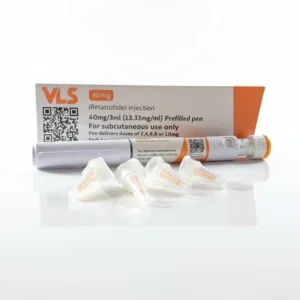
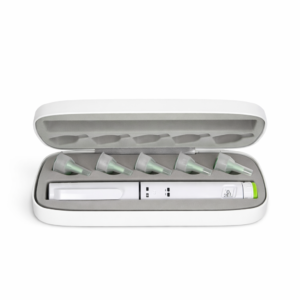
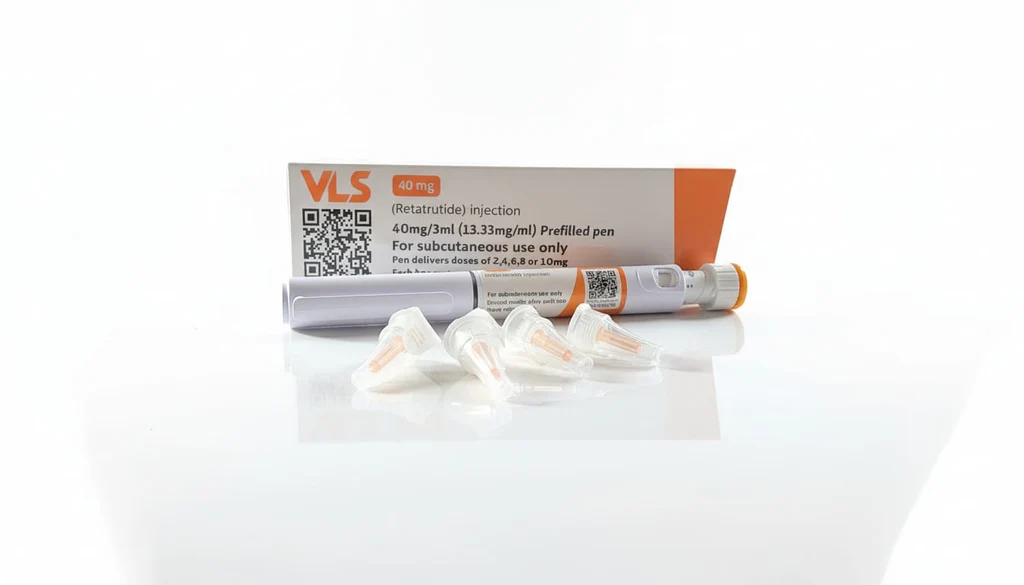
Some VLS listings advertise different product quantities and formats, including pre-filled research pens and laboratory vials. Specifications should be verified against the exact listing because products bearing similar names may differ in formulation, packaging, and documentation.
The name of a compound on a label does not independently establish product identity, purity, sterility, or regulatory approval. Similarly, packaging that resembles a medical injection device does not establish that a product is suitable for human use.
VLS-branded research products should not be assumed to be equivalent to an authorised prescription medicine. Retatrutide itself remains investigational.
2. How Does Retatrutide Work?
Retatrutide is described as a triple hormone receptor agonist because it activates three receptor pathways involved in metabolic regulation.
These pathways include:
- GIP receptors: Involved in glucose-dependent insulin secretion and metabolic signalling.
- GLP-1 receptors: Involved in blood glucose regulation, appetite, and digestive processes.
- Glucagon receptors: Involved in energy metabolism and the regulation of glucose and other fuels.
By activating these pathways, retatrutide may influence appetite, food intake, glucose regulation, and energy metabolism. Researchers are studying how these combined effects influence weight and metabolic outcomes.
The mechanism is scientifically promising, but a biological explanation does not prove that every product marketed as retatrutide produces the same effects. Clinical findings must be interpreted in the context of the investigational medicine, study population, and trial conditions.
3. What Does Clinical Research Say About Retatrutide?
Retatrutide has been studied in clinical trials involving people with obesity, overweight, and certain metabolic conditions. Earlier studies reported substantial average reductions in body weight among participants receiving retatrutide, prompting further investigation in larger trials.
The ongoing research programme is examining potential applications involving obesity, type 2 diabetes, knee osteoarthritis pain, obstructive sleep apnoea, and other related conditions.
These are research objectives, not proof that retatrutide is an approved treatment for each condition. Study results also do not guarantee that every participant will experience the same outcome.
Importantly, clinical trial findings cannot validate a separate research product simply because the product uses the same compound name. Product-specific identity, manufacturing quality, and safety remain separate questions.
4. Is Retatrutide Approved for Weight Management?
As of October 2026, retatrutide remains an investigational medicine and is not approved by the US Food and Drug Administration (FDA) for general public use. Its availability through clinical trials does not mean that commercially advertised research products are authorised medicines.
The distinction between clinical research and commercial availability matters. Clinical trials operate under defined protocols, oversight, eligibility requirements, and safety monitoring. Products sold online under research-use disclaimers do not automatically meet these conditions.
A research-labelled product should not be presented as an approved weight-management medicine or as an established alternative to authorised treatments.
Anyone seeking medical support for obesity or related health concerns should consult a qualified healthcare professional about available, authorised options.
5. Potential Side Effects and Safety Concerns 7 Essential Facts About VLS Retatrutide
Retatrutide
Clinical trials are investigating the safety profile of retatrutide. Reported effects in studies have included gastrointestinal symptoms such as nausea, diarrhoea, vomiting, and constipation. The full safety profile continues to be evaluated.
Because retatrutide is investigational, its risks and benefits are not established to the standard required for an approved medicine.
Products marketed online as retatrutide introduce additional uncertainties. Their actual ingredients, concentration, purity, storage history, and sterility may not be independently established. Contamination, incorrect labelling, or inconsistent quantities could create serious health risks.
The FDA and the company developing retatrutide have warned about unapproved products marketed outside legitimate clinical trials. A research-use label does not make a product safe for human administration.
For these reasons, retatrutide research products should not be used for self-treatment. Medical decisions about weight management or metabolic conditions should be made with a qualified healthcare professional.
6. How to Evaluate Product Documentation 7
For legitimate laboratory research, product documentation can help researchers understand what a supplier claims to provide. Relevant records may include:
- Product identity: Documentation identifying the claimed compound.
- Batch number: A reference connecting the product to its associated records.
- Analytical testing: Methods and results for selected characteristics.
- Certificate of analysis (COA): Batch-specific laboratory findings.
- Storage information: Conditions specified for the particular product.
These documents must be interpreted carefully. A purity result does not necessarily establish sterility, and a supplier’s QR code or verification page does not constitute regulatory approval.
Documentation also cannot establish clinical effectiveness or make an investigational medicine suitable for human use.
For medical treatment, authorised prescription medicines obtained through legitimate healthcare channels provide a more appropriate framework for product verification, prescribing information, and professional monitoring.
7. Frequently Asked Questions About VLS Retatrutide
What is VLS Retatrutide?
It is a product marketed under the VLS name and associated with retatrutide, an investigational triple-receptor agonist. Individual product listings may differ in their stated quantities and formats.
What makes retatrutide different from semaglutide?
It targets GIP, GLP-1, and glucagon receptors. Semaglutide primarily targets GLP-1 receptors. They are different compounds, and retatrutide remains investigational.
Is VLS Retatrutide approved for weight loss?
Do not assume that a VLS research-labelled product is approved for weight management. As of October 2026, retatrutide is not approved for general public use.
Does a 20mg or 40mg label indicate a recommended dose?
No. A product’s stated quantity is not a recommended human dose or proof of product quality.
Does a certificate of analysis prove that retatrutide is safe?
No. It may document selected laboratory results for a specific batch, but it does not establish clinical safety, effectiveness, sterility, or regulatory approval.
What should someone do if they are interested in retatrutide treatment?
Discuss evidence-based options with a qualified healthcare professional. It should not be self-administered outside an authorised clinical trial.
Conclusion
It is associated with an investigational compound that researchers are studying for its triple-receptor activity and potential role in metabolic health. Early clinical findings have generated scientific interest, but the medicine’s safety and effectiveness continue to be evaluated.
The investigational status of retatrutide is essential when interpreting product claims. A commercial research label, stated strength, or supplier-provided documentation does not establish that a product is approved or safe for human use.
For responsible research, evaluate documentation critically and distinguish laboratory products from authorised medicines. For weight management or metabolic care, consult a qualified healthcare professional about established treatment options.
Disclaimer: This article is for educational purposes only and is not medical advice. Retatrutide remains investigational and is not approved for general public use as of October 2026. Research-labelled products are not intended for human or veterinary consumption. This article does not recommend purchasing or self-administering research peptides.