
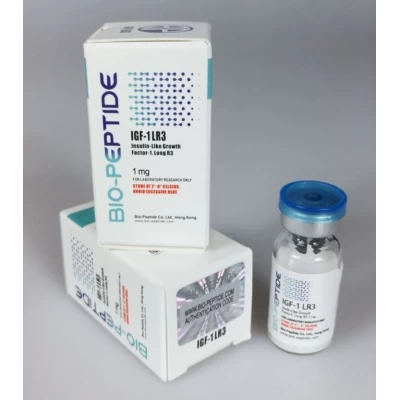
IGF-1LR3 (1 MG/VIAL – 1 VIAL) – 1 Vial: Research Product Information for the UK
Overview of IGF-1 LR3
IGF-1 LR3 is a modified analogue of insulin-like growth factor 1 (IGF-1) that is frequently discussed in scientific and laboratory research. The compound is characterised by an extended peptide sequence compared with native IGF-1, resulting in a molecular structure that researchers investigate in experimental settings.
The listed presentation contains 1 mg per vial and is supplied as one vial. Product specifications should always be checked against the manufacturer’s documentation, including identity, stated quantity, purity information, storage conditions, and applicable handling requirements.
Because IGF-1 LR3 is not an established therapeutic medicine for routine human treatment in the United Kingdom, information about this compound should be presented within an appropriate research context. It should not be promoted as an approved treatment for medical conditions or as a substitute for licensed medicines.
What Is IGF-1LR3 (1 MG/VIAL – 1 VIAL)?
Insulin-like growth factor 1 is a naturally occurring peptide involved in several biological processes, including cellular signalling, growth, and development. Researchers study the IGF signalling pathway because it interacts with numerous physiological mechanisms.
IGF-1 LR3 is an engineered analogue developed for experimental research. Structural modifications distinguish it from naturally occurring IGF-1 and make it an interesting subject for laboratory investigations involving peptide biology and receptor-mediated signalling.
Researchers evaluating this compound may be interested in its molecular characteristics, stability, analytical profile, and interactions within controlled experimental systems. Such research should be conducted using appropriate laboratory procedures and institutional standards.
1 mg/Vial Presentation
The stated product format is 1 mg per vial with one vial included in the package. This specification identifies the quantity of material supplied rather than establishing a recommended dose or intended human-use regimen.
Researchers should review the certificate of analysis and accompanying technical documentation when available. Information such as purity, analytical testing, batch identification, formulation, and storage conditions can be important when selecting materials for laboratory work.
Different suppliers may use different manufacturing, purification, packaging, and testing procedures. Consequently, product specifications should be independently reviewed rather than inferred from the name or quantity alone.
Research Applications
IGF-1 LR3 may be encountered in research involving peptide signalling, molecular biology, receptor pathways, cellular responses, and related experimental fields. Researchers can use controlled laboratory models to investigate biological mechanisms associated with the IGF system.
Potential research areas should not be interpreted as established medical applications. Experimental observations from laboratory or preclinical models do not automatically demonstrate safety, efficacy, or suitability for people.
Research involving growth-factor pathways can require carefully controlled experimental conditions because these signalling systems participate in multiple biological processes. Appropriate study design, validated analytical methods, and suitable controls are therefore important when evaluating experimental findings.
Laboratory Quality Considerations
When evaluating a research peptide, documentation can be as important as the stated quantity. Researchers should consider whether appropriate analytical information is available and whether the material is clearly identified.
Useful documentation may include a certificate of analysis, batch or lot number, stated purity, analytical testing information, molecular identity, and recommended storage conditions. Researchers should also consider the supplier’s quality-control procedures and packaging standards.
Laboratory personnel should follow institutional procedures for receiving, storing, handling, and disposing of research materials. Appropriate personal protective equipment and laboratory controls should be used according to the relevant risk assessment.
Storage and Handling
Storage requirements can vary according to formulation and manufacturer specifications. The original product documentation should therefore be consulted before establishing storage conditions.
Researchers should avoid relying on generic instructions where a manufacturer’s technical documentation is available. Maintaining suitable environmental conditions and limiting unnecessary exposure to heat, moisture, light, or contamination can help preserve research materials according to the applicable product specifications.
Any vial with compromised packaging, unclear labelling, or questionable integrity should be isolated and assessed according to laboratory quality procedures.
UK Research Context
Researchers in the United Kingdom should distinguish experimental research materials from licensed medicines. The fact that a compound is discussed in scientific literature or supplied for laboratory research does not mean that it has been authorised for therapeutic use.
Organisations conducting research should follow applicable institutional policies, laboratory safety procedures, and relevant UK regulatory requirements. Where human or animal research is involved, additional ethical, regulatory, and approval requirements may apply.
A responsible UK product page should therefore avoid claims that IGF-1 LR3 can treat disease, increase athletic performance, promote bodybuilding outcomes, or provide cosmetic benefits. Such statements can create a misleading impression about the regulatory and scientific status of an experimental compound.
Why Accurate Information Matters
Clear product information allows researchers to distinguish factual specifications from unsupported claims. A page describing IGF-1 LR3 should identify the compound, state the supplied quantity, explain its research context, and provide relevant quality and handling information.
Search-friendly content does not need excessive repetition of the target keyword. Natural terminology such as IGF-1, insulin-like growth factor research, peptide research, laboratory compound, 1 mg vial, analytical documentation, and research material can provide useful topical relevance without keyword stuffing.
Product Summary
IGF-1 LR3 1 mg/Vial – 1 Vial is a research-oriented peptide presentation specified as one vial containing 1 mg of material. The compound is an engineered IGF-1 analogue studied in experimental research involving peptide biology and signalling pathways.
Researchers should verify the product’s identity, batch documentation, purity information, storage requirements, and applicable laboratory procedures before incorporating any research material into an experimental workflow.
This product information is intended to support responsible research communication in the UK. It does not represent medical advice, establish therapeutic efficacy, or provide instructions for human administration. Experimental compounds should remain within their appropriate research context and should be handled by qualified personnel using suitable laboratory procedures.
Reviews
There are no reviews yet.